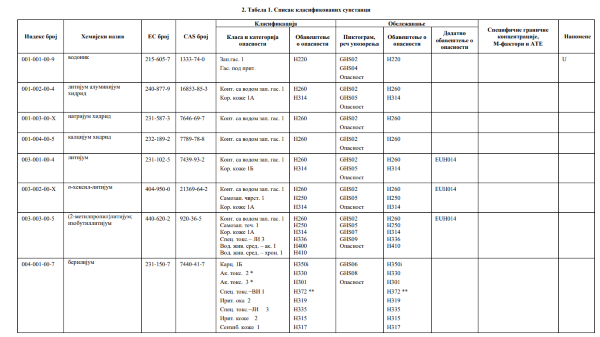
SKS list 2025: Key changes and deadlines for Serbian companies
24/08/2025 | By Ivan Milenković
The date you need to remember: October 1, 2025:
The List of Classified Substances (SKS list) is not just a bureaucratic obligation – it is the foundation of safe chemicals management in Serbia. The changes that are coming will affect all companies that handle chemicals.
Key changes to the SKS list for 2025
Reclassification of existing substances
What is changing:
- Stricter classification of existing substances may affect your existing products
- Added notes may limit application
- Amended specific concentration limits for substances
Practical impact:
- An urgent revision of SDSs becomes mandatory
- Handling methods, protective equipment and storage conditions need to be reviewed
- Employee training needs to be updated
New substances on the SKS list
Important changes:
- An expanded list of harmonised classifications
- New substances added to the SKS list
- Alignment with EU ATP (Adaptation to Technical Progress) updates
What this means for you:
- Your chemicals inventory must be revised
- Revising SDSs for materials containing newly added substances
- New protective measures and safe work instructions may be needed
Changes to specific concentration limits and ATE values
Technical aspects:
- New toxicological data change the risk assessment
- Updated ATE (Acute Toxicity Estimate) values
- More precisely defined values for specific concentration limits for classification
Link with the EU CLP Regulation
Strategic importance:
- The SKS list is part of a wider process of alignment with EU standards
- Critical for companies exporting to the EU
- Preparation for future EU integration
The most common mistakes in complying with the SKS list
❌ Mistake #1: Putting it off until the last moment
- Problem: Waiting until October 2025 to start work
- Solution: Start planning right now
- Timeline: Set aside 3-6 months for full implementation
❌ Mistake #2: Running the revision manually
- Problem: Excel spreadsheets and Word documents without software support
- Solution: Specialised software or professional help
- Benefits: Automatic identification of changes, fewer errors
❌ Mistake #3: Neglecting employee training
- Problem: New regulations, the same way of working
- Solution: Systematic training of teams
- Focus: New classifications, protective measures, emergency procedures
Why is a systematic approach key?
Advantages of a professional approach:
✅ Automated identification
- Software recognises changes in regulation
- Alerts on changes
- Status tracking for all chemicals
✅ Precise documentation
- Standardised SDS formats
- Automatic updating of related documents
- Change tracking
✅ Freeing up resources
- Your people focus on production
- Lower risk of human error
- More time for strategic tasks
Action plan: what to do today
This month (August 2025):
- 📋 A complete inventory of all the chemicals you use
- 🔍 Identification of risky materials that may be affected
- 📧 Contact with suppliers for the latest information on classifications
September 2025:
- 📝 Start of the SDS revision according to the new SKS list
- 👥 Employee training plan for the new procedures
- ⚖️ Consultation with a regulatory expert
By September 30, 2025:
- ✅ All SDSs updated to the new requirements
- 📚 Employees trained on the new classifications
- 📋 A documented procedure for future updates
The SKS list and EU regulation: a strategic perspective
For exporters:
- Compliance with the SKS list = easier access to the EU market
- Harmonised standards reduce adaptation costs
- Credibility with European partners
For the local market:
- Higher safety standards
- Better risk management
- Preparation for future regulatory changes
Conclusion: an investment, not a cost
SKS list compliance is not just a regulatory obligation – it is an investment in:
- Employee safety
- Business continuity
- Company reputation
- Future competitiveness
Don’t wait for October 1 – start today!
This blog post is for informational purposes only and does not constitute legal advice. For specific situations, consult a licensed chemical adviser or a lawyer specialising in chemical regulation.
← Back to blog