Circular Economy Programme 2026-2030 and chemicals: an introduction to the series
10/05/2026 | By Ivan Milenković
In April 2026, Serbia adopted the Circular Economy Development Programme for the period 2026-2030, published in the Official Gazette of RS, No. 41/2026. The document covers a wide range of areas: waste, energy, public procurement, tourism. Circular economy and chemicals as a separate topic in it are not spectacular, but they are well grounded. This series is devoted to exactly those links.
Chemicals in the Programme are not a footnote
The Programme explicitly lists chemicals management as one of the areas covered by the previous programme for the period 2022-2024. In the new cycle, that link has been deepened.
The starting point is a concrete problem that the document names directly. The lack of precise information on the presence of prohibited and harmful substances in products makes safe recycling and reuse of materials difficult. This is not a theoretical observation. It describes the situation of companies trying to manage recycled material without reliable data on the chemical composition of incoming streams.
The Law on Chemicals (Official Gazette of RS, No. 36/09 with later amendments) is aligned with a large part of the REACH Regulation (1907/2006/EC). It regulates the obligation to communicate on SVHC substances along the supply chain. The Programme nevertheless notes that the transfer of information is still incomplete. That incompleteness is not just a regulatory gap. In practice it prevents material flows from being closed.
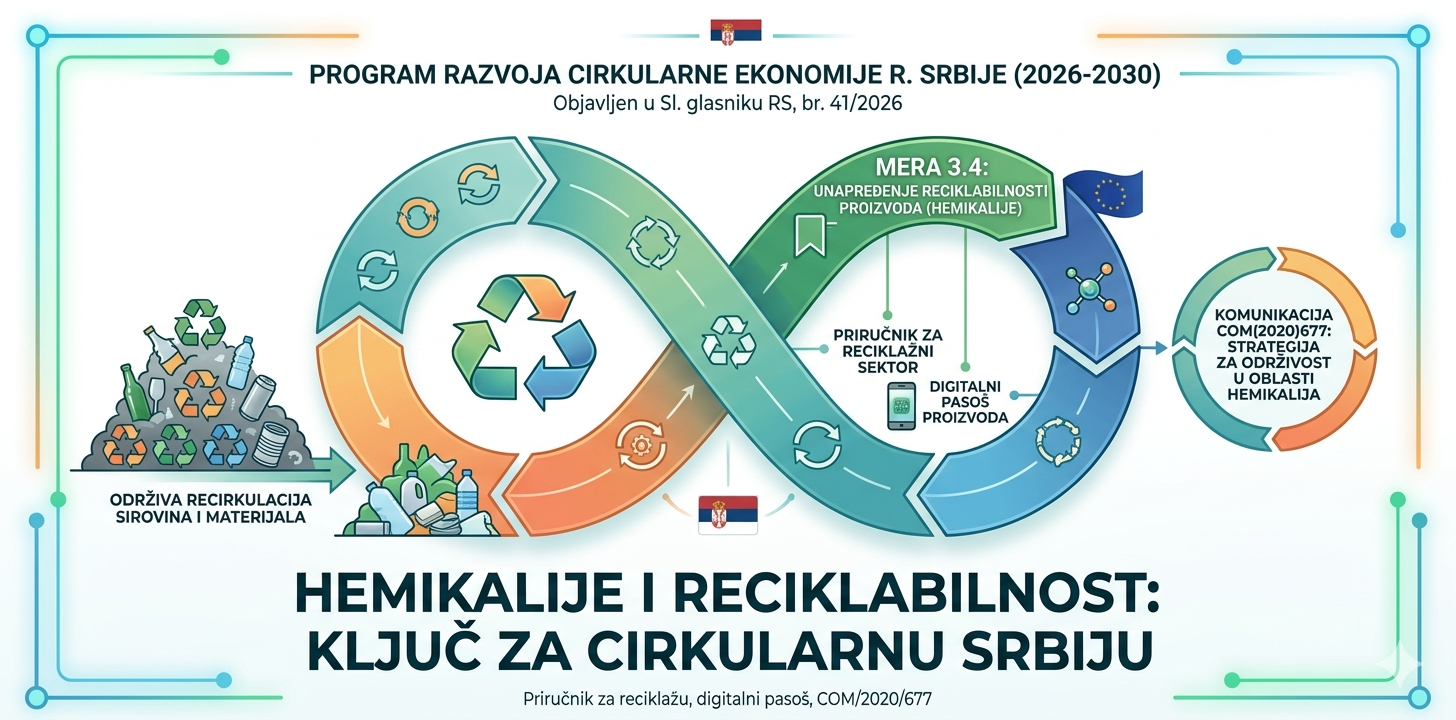
One of the concrete responses is Measure 3.4 of the Programme. It provides for the preparation of a handbook on chemicals that can endanger circular material flows and recycling processes, with methods for detecting and removing them. The deadline for preparing it is 2026.
Four topics of the series
This article is the introduction. In the upcoming posts I will analyse the following areas of the Programme:
Chemicals and recyclability of materials.
SVHC substances, REACH obligations in the supply chain and the link with safe recycling. Why an SDS is not just paperwork at the end of the process, but an input for the recycling decision.
Measure 3.4 up close.
A handbook for the recycling sector: scope, relevant material categories and the companies it applies to.
Digital product passport.
Regulation (EU) 2024/1781, known as ESPR, introduces the DPP from 2026. The Programme recognises it as an instrument of the circular transition. Chemical composition becomes a mandatory, structured record of the product, available along the whole chain.
Chemicals Strategy for Sustainability (COM/2020/667).
This EU document strengthens the link between legislation on chemicals, products and waste. The Programme positions it as part of the framework that Serbia actively follows in the harmonisation process.
The Programme is not a binding regulation. It is a strategic framework that shapes the direction of future legislation and the regulatory pressure coming from the EU. For companies managing chemicals in Serbia, the relevance is direct.
Next topic: chemicals and recyclability of materials.
References:
This blog post is for informational purposes only and does not constitute legal advice. For specific situations, consult a licensed chemical adviser or a lawyer specialising in chemical regulation.
← Back to blog